
California SB 1123: What It Means for Lot Splits, ADUs, and Your Soil Report


If you're a homeowner, architect, or builder in the Bay Area eyeing a vacant lot or a single-family property with ADU potential, a new state law is about to change what's possible — and it starts with what's under the ground.
What SB 1123 Actually Does
SB 1123 (Caballero) took effect July 1, 2025, and expands SB 684, the 2023 law that let developers ministerially (no discretionary hearings, no CEQA review) split a parcel into up to 10 smaller lots for starter-home development. SB 684 originally applied only to lots zoned for multifamily residential use.
SB 1123 extends that same streamlined process to vacant lots zoned single-family residential, as long as the lot:
Is vacant and no larger than 1.5 acres
Is substantially surrounded by existing urban development
Results in new parcels of at least 1,200 square feet each
In practice, this opens single-family neighborhoods — including many established Bay Area subdivisions — to lot splits and small-lot infill housing that previously required a lengthy rezoning or variance process. For property owners sitting on an oversized single-family lot, that's a meaningful new path to unlocking value.
Where ADUs Fit In
SB 1123 doesn't replace ADU law — it works alongside it, and it changes the math for a lot of ADU-adjacent projects:
More lots means more ADU-eligible parcels. Each new parcel created under SB 1123 is its own legal lot, and each one can independently qualify for an ADU or JADU under existing state ADU law. A single vacant lot that once supported one primary home plus one ADU can, after a qualifying split, support multiple primary homes each with their own ADU potential — significantly more density than a single-lot ADU project alone.
Objective standards still apply, and can be waived. Like SB 684, SB 1123 allows applicants to request a waiver or modification of objective zoning, subdivision, or design standards that would otherwise make the project infeasible — including standards that might affect where a home or ADU can physically sit relative to slope, drainage, or setbacks.
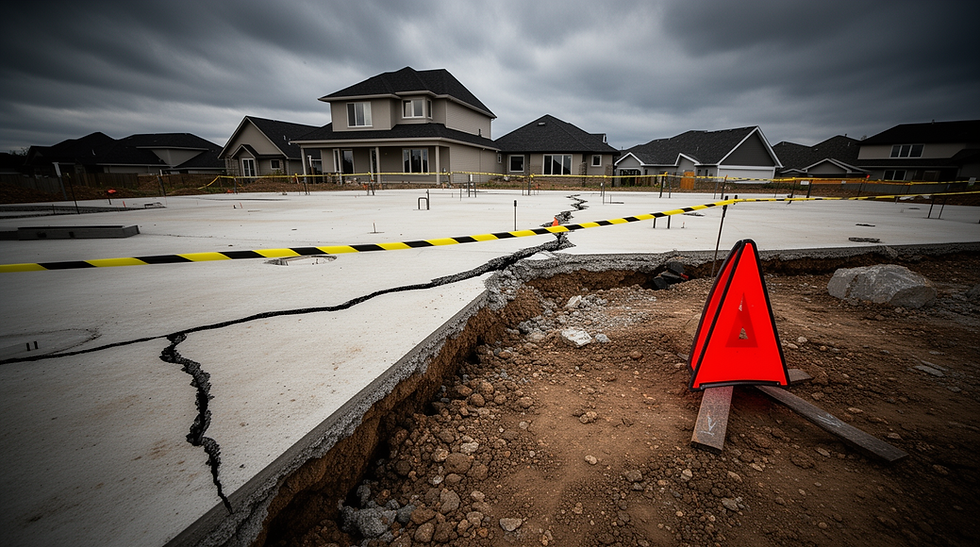
It doesn't waive geotechnical requirements. This is the part that gets missed. Ministerial approval means the planning review is streamlined — it does not mean the local building department skips soils and foundation requirements under the California Building Code. If anything, splitting one lot into multiple buildable parcels usually means more footprints, more foundations, and more individual geotechnical questions to answer, not fewer.
Why the Soil Report Comes Before the Site Plan
We're already seeing this play out on multi-lot subdivision work: a 4-lot Livermore project and similar SB 684/1123-style splits need geotechnical input scoped differently than a single-home or single-ADU report. A few things we're flagging early for architects and builders bringing us SB 1123 projects:
One soil report rarely covers the whole split. Depending on lot size and soil variability, each new parcel may need its own boring(s) or at minimum parcel-specific recommendations rather than a single blanket report.
Liquefaction and seismic hazard screening apply per building footprint, not per original parcel — more buildings on a subdivided site can mean more CGS Zone of Required Investigation triggers to check.
Access gets tighter as lots get smaller. A 1,200-square-foot minimum parcel leaves little room for drill rig access once a home or ADU footprint, setbacks, and parking are accounted for — this needs to be planned for during entitlement, not discovered during construction.
Foundation and grading recommendations drive the subdivision map, not the other way around. Getting a geotechnical scope wrong at the front end is one of the more expensive mistakes we see on infill projects.
The Takeaway
SB 1123 is good news for anyone sitting on a single-family lot with room to split, and it meaningfully expands where ADU-driven density can happen in the Bay Area. But the streamlined approval process is a planning shortcut, not a soils shortcut. If you're an architect, ADU builder, or homeowner evaluating a property for a potential SB 1123 split, loop in a geotechnical engineer during feasibility — before the subdivision map is drawn, not after.
AK Geotech provides residential geotechnical soil reports, construction observation, and related services across the Bay Area. If you're evaluating a property for a lot split or multi-parcel ADU project, contact us to talk through scope before you commit to a site plan.



Comments