
Why the Cheapest Geotechnical Report Is Rarely the Cheapest Choice

When you're budgeting a new home, an ADU, or an addition, the geotechnical report can look like a line item to minimize. Three quotes come in, one is a few hundred dollars lower, and the decision seems easy.
It usually isn't. The foundation is the one part of a building you can't easily fix later, and the geotechnical report is the basis for everything built on top of it.
You're Not Buying a Document
A geotechnical report isn't a stack of pages to hand to the building department. You're paying for an engineer's judgment about what's happening under your site: soil strength, groundwater, slope stability, liquefaction potential, expansive clays, and how all of that should shape your foundation.
Two reports can look identical on the shelf and differ enormously in what went into them. A low price has to come from somewhere, and it usually comes from one of these:
Fewer or shallower borings. Soil changes quickly, and a single boring can miss a fill pocket, a weak layer, or an old void that matters.
Template-driven analysis. Boilerplate recommendations that don't address your specific lot, slope, or proposed structure.
Skipped analyses. Slope stability or liquefaction evaluations that a hillside or valley-floor site actually needs, left out or handled in a sentence.
No follow-through. No one reviewing the plans against the recommendations, and no one on site during excavation or foundation work.
The Math Rarely Works Out
Geotechnical work is typically a fraction of one percent to a couple of percent of total construction cost. Saving a few hundred dollars here puts the other 98-plus percent of your budget at risk.
When the report is thin, the problems show up later and cost far more:
Over-conservative design. An engineer with little data protects themselves by assuming the worst, and you pay for extra concrete, deeper footings, and unnecessary piers.
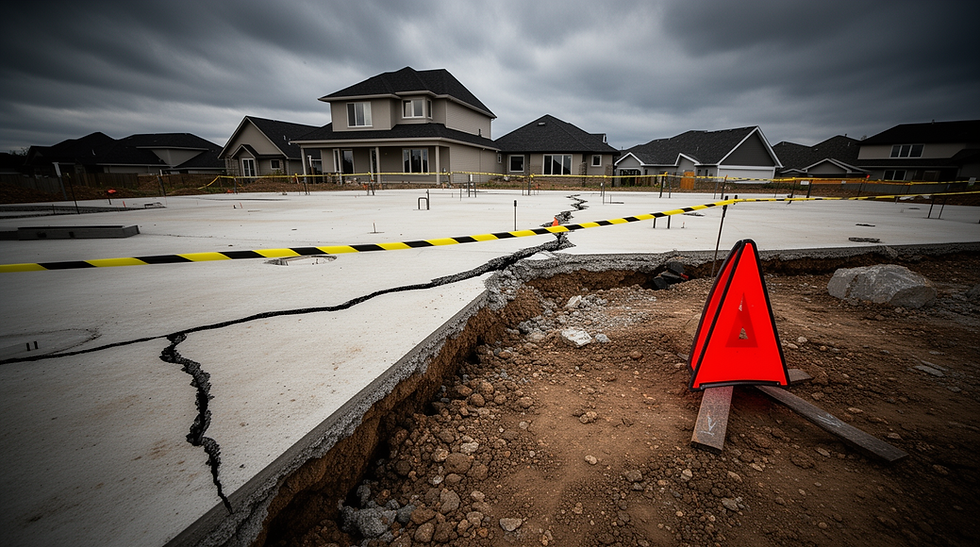
Under-designed foundations. The opposite failure is worse: settlement, cracked slabs, sticking doors, and sloped floors.
Change orders and delays. Unexpected conditions found mid-construction stop work, and a crew standing around costs far more than a good investigation would have.
Plan-check comments. Reviewers send incomplete reports back, which means rework and weeks of lost schedule.
Resale and financing trouble. Buyers, lenders, and insurers ask about foundation history, and a weak report doesn't hold up.
Good Engineering Saves Money, Too
The point isn't that more expensive is always better. Good geotechnical engineering is often what lets you spend less where it counts. Solid data lets the structural engineer design a right-sized foundation instead of a padded one, avoids surprises in the field, and gets plans through review the first time.
How to Compare Proposals
If you're collecting quotes, look past the bottom line:
Scope. How many borings, to what depth, and what lab testing is included?
Analyses. Does the proposal address the hazards your site actually has: slope stability, liquefaction, expansive soils, drainage?
Who does the work. Is a licensed engineer on your site and writing your report, or is it handed down the chain?
Construction support. Is plan review and field observation included or available? A report that no one verifies in the field is only half the job.
Communication. Will you be able to call the engineer who wrote it and get a straight answer?
If one proposal is far below the others, ask what it leaves out. A price that's lower for the same scope is a good deal. A price that's lower for less scope isn't.
The Bottom Line
The same is true across engineering: structural, civil, mechanical, and everything else. You're not paying for hours or paper. You're paying for the judgment of someone who is accountable for the result. Underneath a building, that judgment is the one thing you can't inspect after the fact and can't afford to get wrong.
Choose the engineer you'd trust with the part of your project that has to be right the first time.



Comments